A Little May Magic: Wild Violets Uses, Benefits & How to Harvest
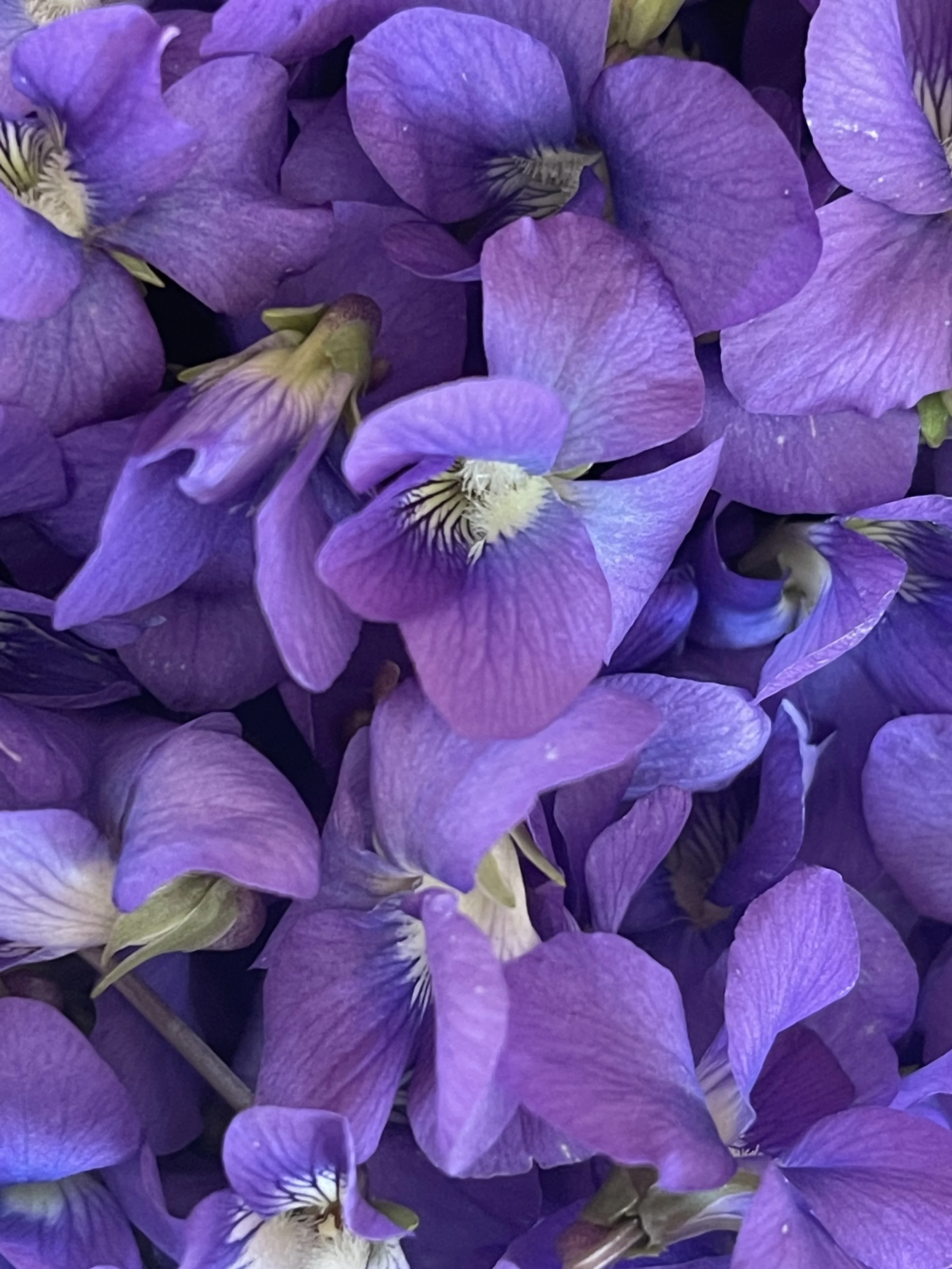
Wild Violets
A beginner-friendly guide to foraging, herbal benefits, and simple ways to use wild violets in early spring.
As the sun sets a little later, there’s a little magical plant glistening in many yards in early May. These sweet wild violets (Viola spp.) won’t last long, so be sure to look down and notice the violets (Viola spp.) before they are gone. Look for them around your house, especially along the edges of yards, garden beds and walking paths.
As a child, my mom taught my siblings and me that violet leaves and flowers are edible. I would often pick one of the blossoms on the fly, then pop it in my mouth, before running off to play. These plants don’t last long, but when you catch them, they offer a simple and special way to bring beauty (and a little magic) into your kitchen.
How to Identify and Harvest Wild Violets (Viola spp.)
Wild violets are on the easiest edible spring plants to forage. Look for common blue violets (Viola soraria) growing around your home or garden. These “weeds” are actually native to some areas of North America. They grow low to the ground, and adapt easily to areas where humans have disturbed the soil, such as sidewalk cracks, hiking trails, or gardens.
Wild violets can be safely harvested if they are in areas that are untreated and free from pet use. As always, practice safe harvesting through proper identification, use of field guides (not just apps), and training from experienced foragers. Please note that some Viola species are at risk, so be sure to identify properly and harvest ethically.
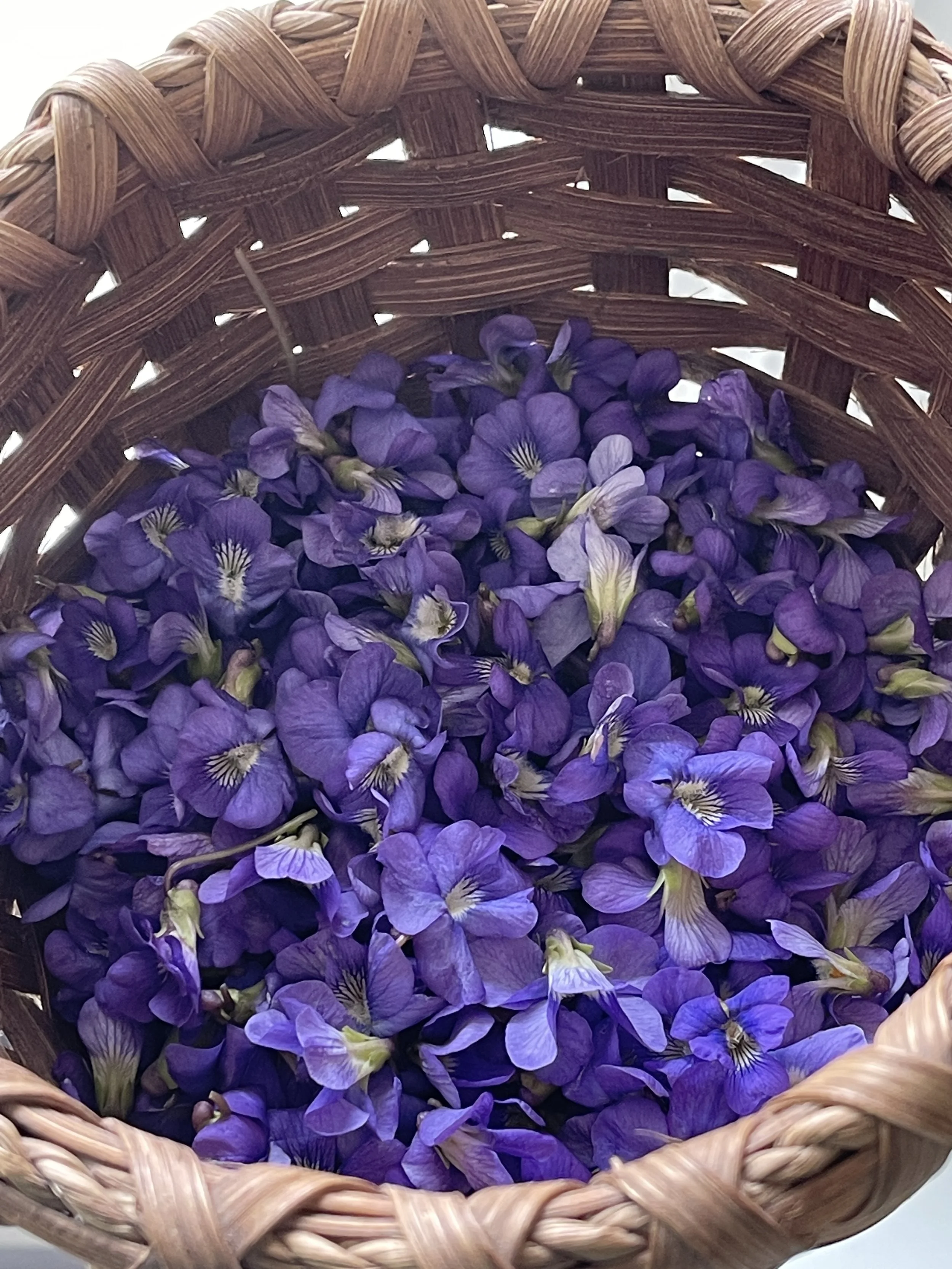
A basket of foraged wild violet blossoms.
A few gentle guidelines for foraging wild violets:
Harvest on a dry day, after the morning dew has evaporated
Choose vibrant, freshly opened flowers
Pinch just the blossoms so that the patch can continue to grow
Gather mindfully, giving thanks for each beautiful bloom
Place in a small basket, or paper bag
Only take what you need
Violet Benefits and Herbal Uses
Violet has a long history of use in Western herbal traditions, especially for its cooling, moistening and soothing qualities. Both the flowers and leaves of Viola species contain mucilage, a type of polysaccharide that becomes slimy, or gel-like when mixed with water. This is part of what gives violet its reputation as a gentle support for easing irritated and scratchy throats.
Historically, violet has also been used topically in the form of poultices, compresses, infused oils or salves. Due to its cooling and soothing properties, it can ease dry or irritated skin.
Culinary Uses for Wild Violets
Violet also has many culinary uses as well. The leaves and flowers can be eaten fresh or made into tea. The edible violet flower petals can be used to make a purple simple syrup. Many people enjoy using the flowers in salads, or as a garnish. My mother often makes candied violets, which makes them extra special and sparkly when they are added to cakes, cookies or ice cream. I prefer to make mine into a simple syrup to make pretty springtime drinks, including spritzers, violet lemonade, and cocktails or mocktails.
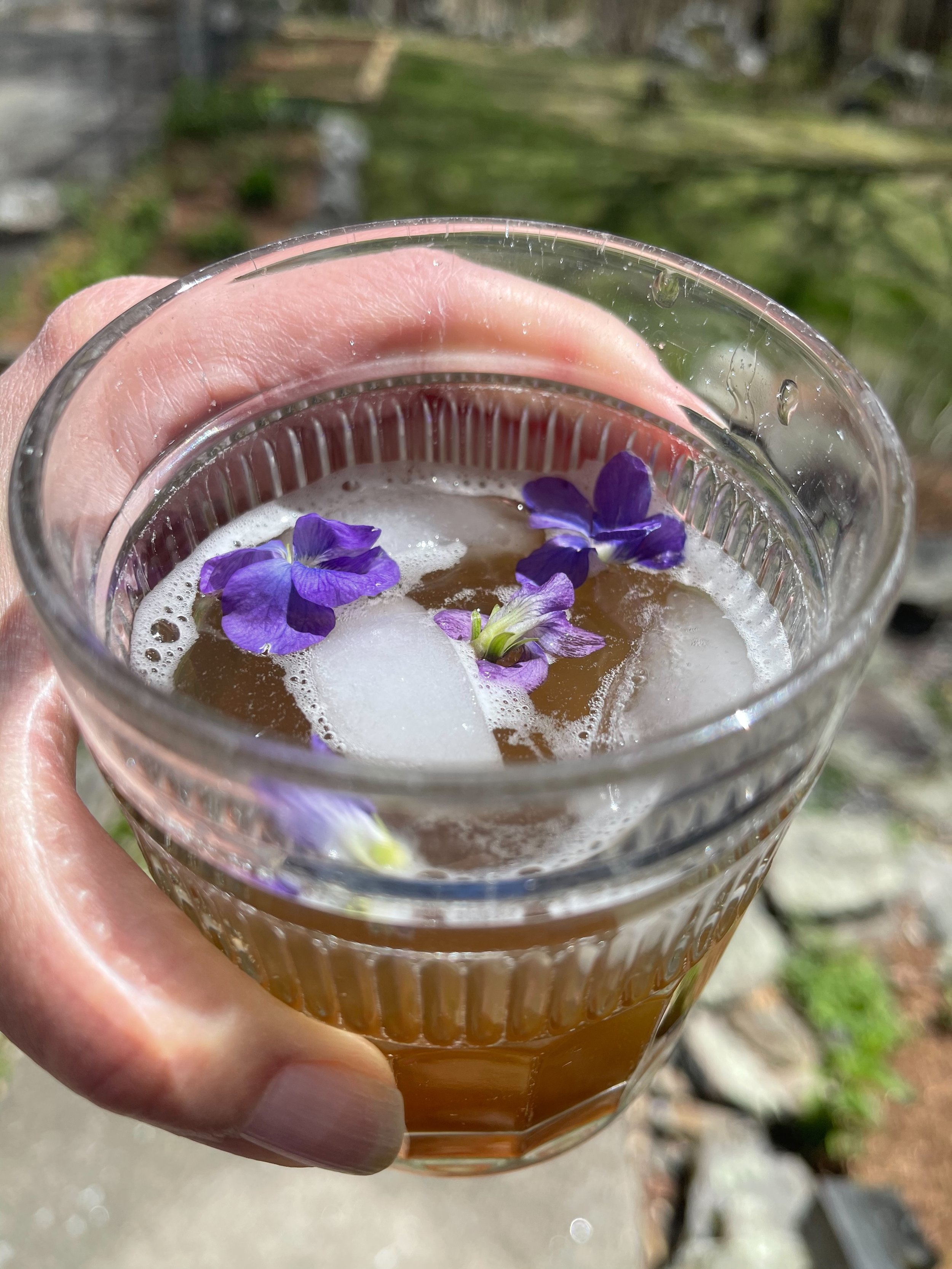
Wild violet mocktail
Simple Violet Herbal Preparations
Violet Tea
Standard or cold infusion of dried violet leaves
Drink 1 cup as needed.
Violet Infused Springtime Vinegar
1 part combination of fresh springtime herbs of choice
(Choose from: violet leaves and flowers, mint, purple dead nettle, chickweed, plantain leaf, nettles, cleavers)
2 parts vinegar of choice
Use as a salad dressing.
Violet Infused Massage Oil (Topical application only)
1 part fresh violet leaves and flowers, chopped
2 parts carrier oil of choice
Use for massage, especially for breasts and heart center.
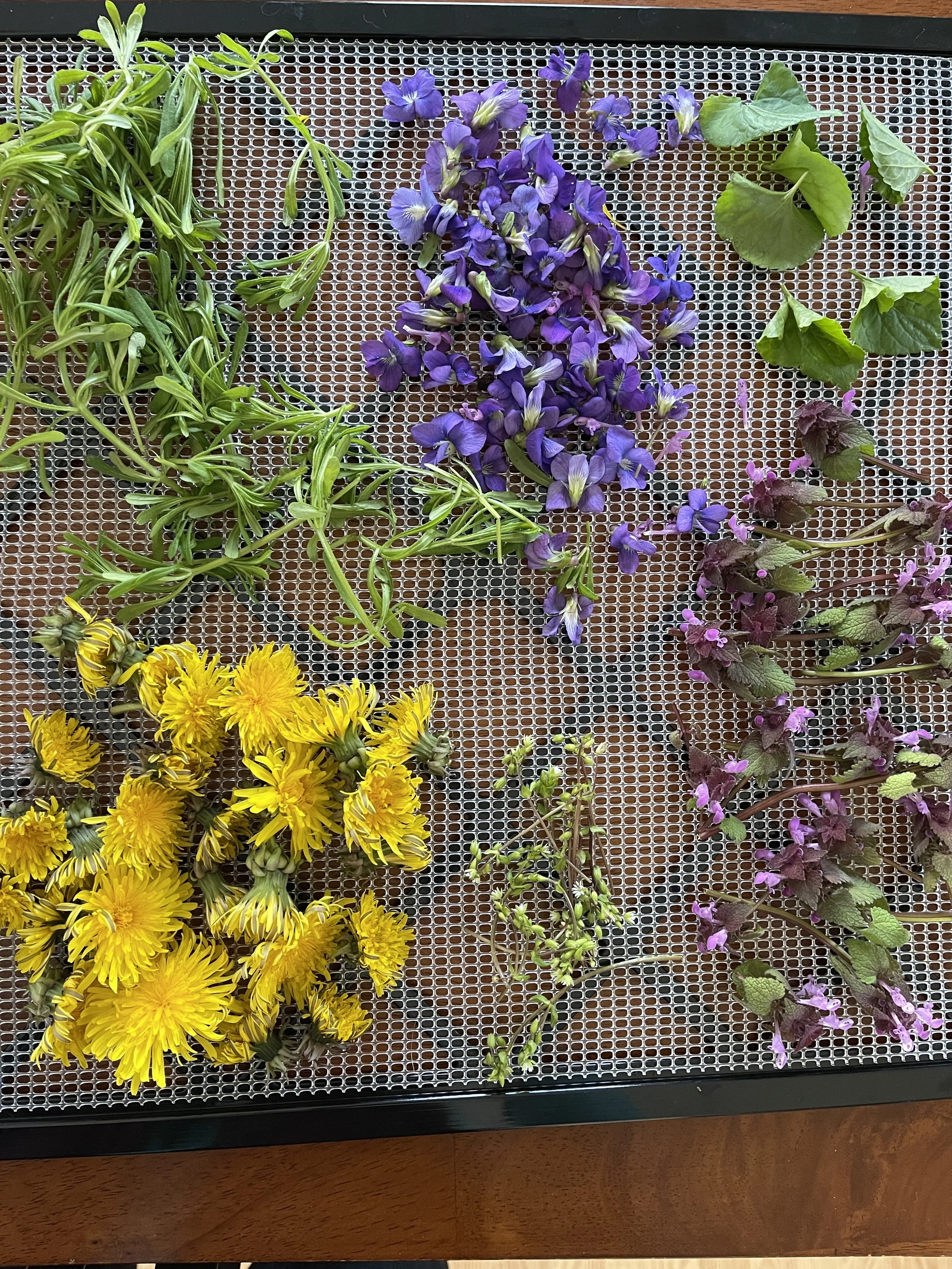
Freshly harvested springtime herbs (cleavers, violets, dandelions, purple dead nettles).
Traditional and Folkloric Uses of Violets
In Celtic traditions, wild violets were historically used in dream work. You can dry the flowers and place them in sachets, or combine them with other dream herbs such as lavender or mugwort. Violets are considered to be connected to the faerie realm, and are associated with protection, healing and mourning.
So step outside, notice what’s growing and if you’re lucky enough to find a patch of violets underfoot, take a moment to stop and enjoy their magic!
FAQ About Wild Violets (Quick Answers)
Can you eat wild violets?
Yes—both the leaves and flowers of many Viola species are ediible when properly identified.
What do wild violets taste like?
The flowers are mildly sweet and floral, while the leaves are more neutral and slightly mucilaginous.
Are violets safe to forage everywhere?
Only harvest from clean, untreated areas and always confirm proper identification.
References
Gina McGarry, Brighid’s Healing (Green Magic, 2005).
Liz Neves, Northeast Medicinal Plants (Timber Press Inc, 2020).